Android Phone Farm Hardware Explained: Boxes, Racks & Motherboard Arrays
Buyers searching Android phone farm hardware usually mean physical chassis that power, cool, and route USB to multiple Android devices from one control PC — not cloud emulators or software-only stacks.
What counts as Android phone farm hardware
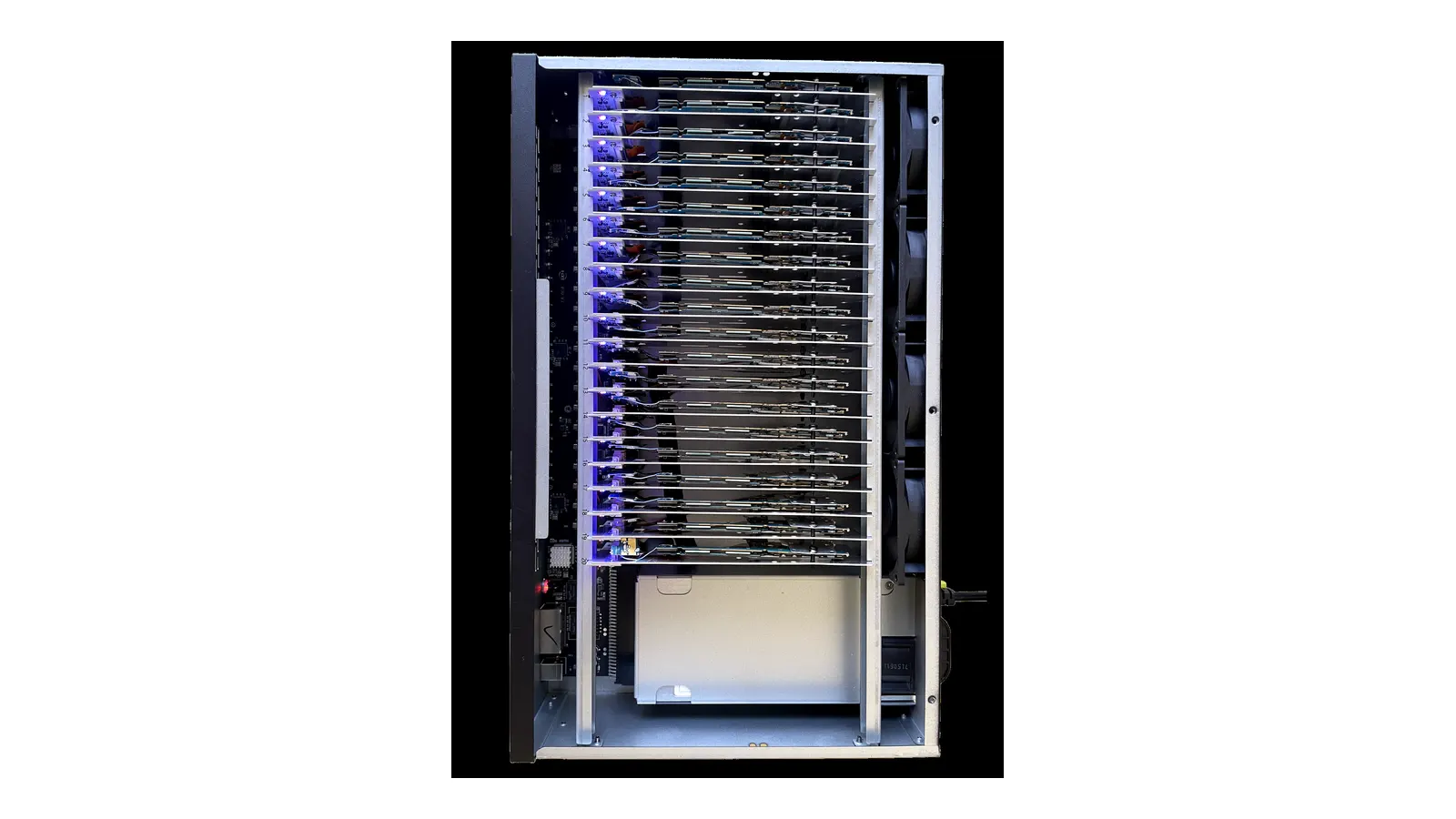
Complete chassis: A phone farm box or rackmount array with centralized PSU, active cooling, slot rails, and a USB backplane — one uplink cable per chassis to your host.
Motherboard arrays: Motherboard Box holds screenless Android boards without phone batteries — lower thermal load for continuous lab use.
Starter pilots: Android Device Lab Starter validates slot spacing and USB controllers before a 20-node rollout.
Rack integration: Rackmount Phone Farm +20 is the same 20-node density in a 2U phone farm rack for server cabinets.
How Android device farms connect to your PC
Each chassis exposes one USB 3.0 uplink to a host with sufficient root controllers. Typical engineering workstations run 1–4 chassis (20–80 nodes). Our Remote Control Setup documents topology during handover.
Factory-direct vs DIY hubs
DIY USB hubs fail under sustained 20-device load — voltage drop and controller contention cause flaky ADB. Factory chassis size PSU, fan arrays, and internal harnesses for batch device testing and remote device management workloads.
Procurement from Guangzhou
Max Phones Farm assembles and burn-in tests in Guangzhou. MOQ 1 unit. Lead time 3–15 days. Export packing with commercial invoice. Request a quote with your Android model list.
Related: What Is a Phone Farm Box? · App Testing Labs Guide